Owning a Milk Goat
Nigerian Dwarf Goats are great for your homestead if you are looking to own a milk goats. Because of their shorter size they require less feed and get into less trouble!
How do I get my Goat to start producing milk?
Goat start producing milk after they kid. So you will need to find a farm who offers stud service. You would pick up the buck (or deliver your doe) and leave them there for a couple of hours when your doe is in heat. 150 days later they will kid and begin producing milk. The first month you should allow her kid to consume all the milk, but afterwards you can separate them at night and come out and milk in the morning.
How often do I need to Milk?
To keep your doe in milk, she must be milked every day! If she has a kid with her, they will drink from their mothers allowing you a break and helping on the rare day when you miss.
What do I feed my doe?
Goats are very versatile with their feed, but if you are milking them what you feed can change the flavor of the milk – refer to our article on feeding your does that are in milk.
Getting your Goat Pen Ready
Please take the time to get your property ready for your new animals. When they come to you they are young and small – so if it is winter be sure you have extra bedding until they get more bodyfat. A heat lamp is also a good idea – on very cold winter nights we have used a 250W red heat lamp for the youngest babies.
Goats are not considerate of where they go to the bathroom. Unlike pigs they do not have a favorite corner, so plan your pen to make it easy to clean and replace the bedding.
Fencing
Goat kids (and adults) will be sure to exploit any hole they can squeeze through, a table they can climb on, and chew any plant they can reach! We recommend using pigwire when you build out their pens, it is strong and the holes are smaller toward the bottom. T-Bars are a great way to erect fencing quickly and still keep it strong. Make sure your fences are a minimum of 4′ high (but keep climbing objects away from the fence as goats will just jump off a table or large rock over a 4′ fence). Playground equipment for goats would include a toddler slide, large tires buried vertical, boulders, or large spools used by electrical contractors.
Shelter
Goa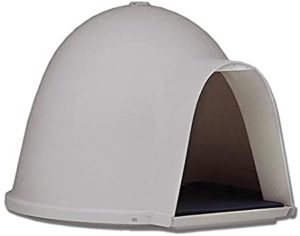 ts can live in a simple shelter such as a medium to large dog igloo to a goat condo! What is of imperative importance is that they are able to get out of the weather. There is a common saying among goat owners, “a wet goat is a dead goat.” That being said, goats absolutely hate getting wet! Whatever shelter you choose to buy/build it will need to be mucked out weekly or sooner. When waste matter is left behind (especially if there is no air circulation) ammonia fumes build up and linger at the bottom of the enclosure. The build up and constant inhalation of these fumes can/will irritate the goats lungs and they can develop pneumonia. Pneumonia in goats more times than not results in the death of the goat.
If you buy a dog igloo, get the large size (over 50lb animal) and flat bottomed igloos are easier to rake out.
Water
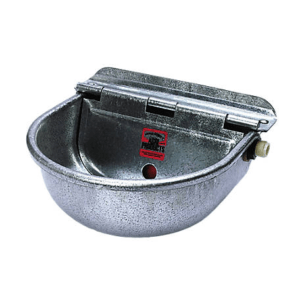 Make sure you have a freshwater delivery system as well. So as you prepare your farm now is the perfect time to run some PVC and setup a livestock waterer.
https://www.tractorsupply.com/tsc/product/little-giant-automatic-waterer
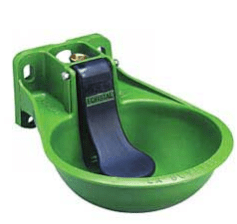 We recommend a bowl type that mounts to a fence and includes a float and if you have high water pressure (above 50 PSI) use interactive watering devices like a paddle water bowl that requires your goat to push on a level with their nose. Put these waterers high enough so they cannot poop in them. Also be prepared to use a cinderblock so your bucklings and doelings can reach the water until they grow taller.
If piped water is not available, use a flat backed bucket and a bracket to mount it securely to the wall of a barn or wooden fence. These buckets are great for feeding.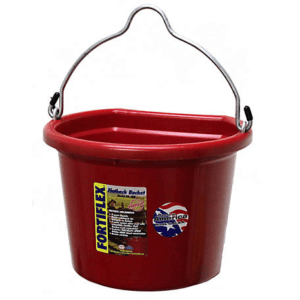
Feeders
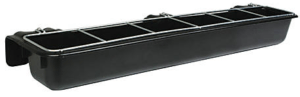
Flat backed buckets work great for 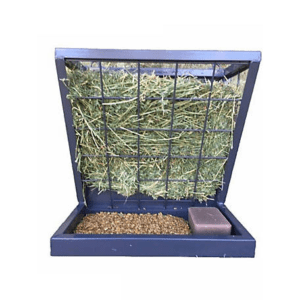 feeding grain, but if you have many goats I would consider a trough that mounts to the fence. Goats are messy with their hay so use a large trough or a hay feeder.
What to Feed Nigerian Dwarf Goats
Most people think goats will feed on anything, “tin cans,” but this simply isn’t true; they are actually very picky eaters. In spite of popular belief, Nigerian Dwarf Goats are not strictly grazers actually, they’re browsers. The difference between the two are browsers like to take a nibble here and a nibble there of any bush or tree that they might have access to on your property. Shrubs and leafy plants will be the first things that goats go for, especially the pretty ones! They will eat grass but if they have a choice they will choose leafy plants as evidenced in my backyard. All our bushes are stripped of leaves and the trees are trimmed perfectly at goat head height! However, we still don’t mow our lawn because goats will default to the grass once everything else is no longer reachable.
Now that there is some common ground in defining Nigerian Goat feeding behavior let’s talk about what to feed. What you feed your Nigerian goats depends on 2 things:
- The nutritional quality of the soil in which the feed is grown.
- The gender and stage of your Nigerian goat.
What to feed Nigerian Dwarf Does
The feeding regime we implement for our Nigerian does involves using quality alfalfa hay in the morning and quality forage hay in the evening. Alfalfa is legume hay and contains more calcium and protein than forage/grass hays. Legume hay (alfalfa) will have about twice as much calcium and protein as grass hay. Does in milk and their growing kids will benefit from the extra protein provided in the legume type of hay. Forage hay as well as Timothy, Bermuda and Orchard grass hay are all grass hays with lower protein and calcium percentages.
What to feed Pregnant Does and growing Kids
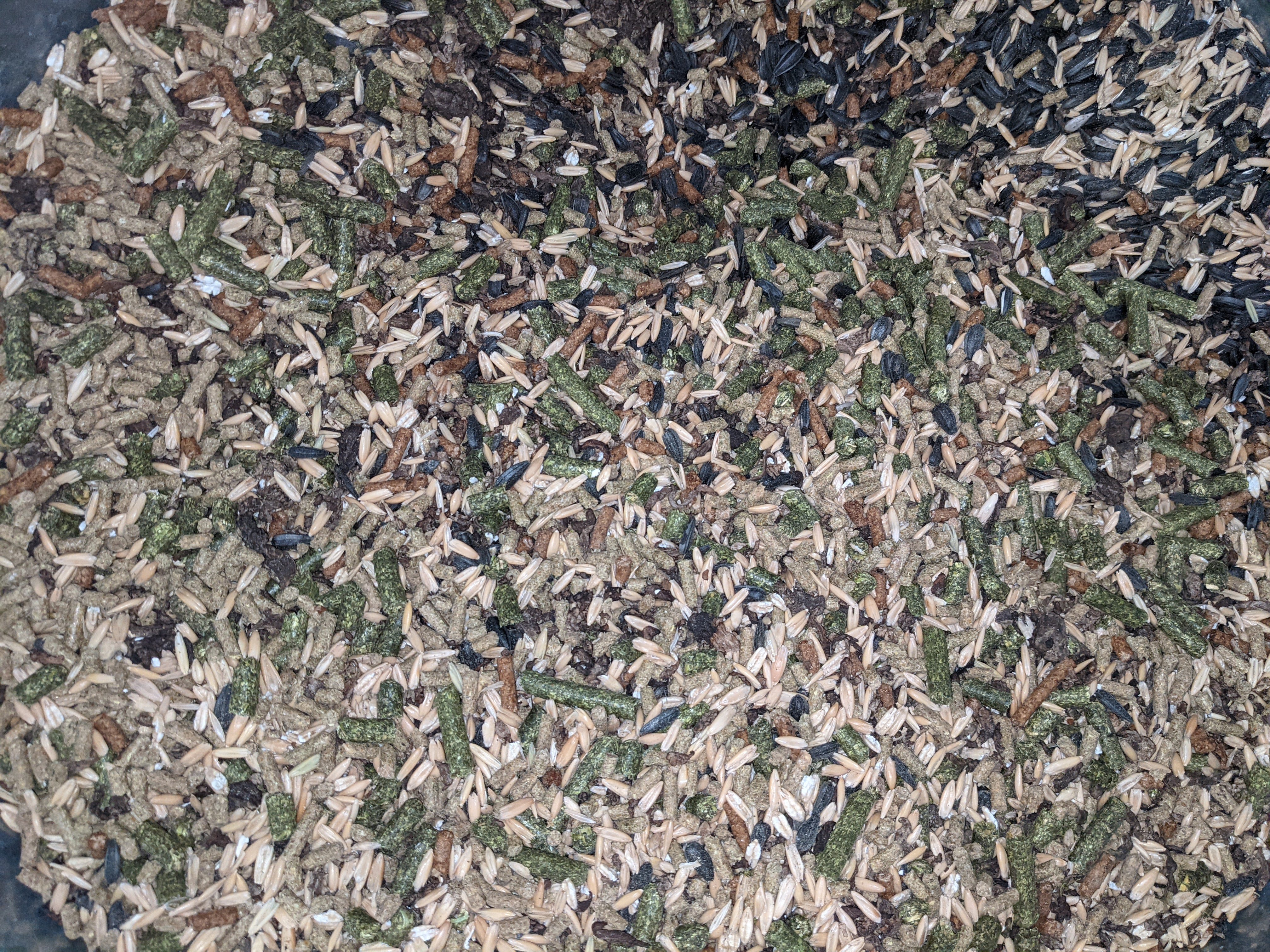
Our does are supplemented with a mixture 2:1:1 rolled oats, BOSS (black oil sunflower seeds), and Alfalfa pellets. Does that are in the late stages of pregnancy, about 1 month to go, are given this grain mixture to give them extra nutrition and energy for the finishing of fetal & mammary development. Growing goat kids also need the extra protein provided by the grain. You may be able to find some premixed grain rations available in farm supply/feed stores. Check the label to ensure that the grain mixture is around 16% protein, 16% calcium to 8% phosphorus.
In the end you will have a grain mixture that looks like the picture on the right.
What to feed Milk Does
If you have Nigerian Dwarf Dairy Goats as a source of your own milk, there are things yo can do to influence the flavor of their milk. We have found that if you feed the Nigerian Dwarf Does a 2:1 ratio of the mixture above and shredded beet pulp the combination of the beet pulp and the BOSS will sweeten the milk. It is also a good idea to keep your milking does away from eucalyptus trees and leaves.
You may also want to read our article on feeding Nigerian Dwarf Wethers
Supplementing your herd with Selenium
Selenium is a form of Vitamin E that usually occurs naturally in the feed for your livestock animals. However, there are several geographic regions where selenium is not found in the soil, so the locally grown hay will be deficient requiring you to supplement. That happens to be the case for our ranch as well.
For goats, a deficiency in Selenium can lead to White Muscle Disease and you can especially see this in your kids. You an consider Selenium the ‘Folic Acid’ for your farm as this is a very important nutrient when your does are pregnant.
Selenium is important for the pig as well increasing the efficiency of the immune system.
Supplementing can be as easy as sprinkling it on their feed, and for goats you can leave the minerals out for them to freely consume.
Why Supplement with Copper
Copper (Cu) is an essential trace mineral required for the healing of normal connective tissues including tendons, ligaments, cartilage and bone. Copper is also important for vibrant color in a goat’s skin and coat pigments. Copper has also shown helpful for proper nerve signaling and the absorption and utilization of Iron. And of course Iron is key for healthy blood. Copper also aids in parasitic resistance with your herd.
Copper deficiency in goats can result in poor hair coats, reduced growth, reduced fertility and impaired immune system function.
The best way to supplement your herd is with loose minerals freely available in an open trough. This trough should be kept high enough that adults can eat the minerals when needed. If kept too low goat kidlings are more likely to play in it and goats poop on everything so you will need to clean out their mineral trough more often.
if more copper is needed, or you prefer to know exactly how much each of your goats is consuming, you can feed copper directly to them, this is called copper bolusing. When you purchase copper supplement pills from your feed store they are in capsules (or a boluse) but at a dosage for cattle (23.5g). Contained inside each capsule are small coper rods. Goats love grain so you can easily give them their copper dose by sprinkling about 2g of copper in their grain. An easy guide for dosage is 1g of copper per 20 lbs of body weight.